It all started Wednesday night when the sea got rough. The boat was anchored just off the coast and tied to a tree at camp. I was in the kitchen with Finau cooking spaghetti for dinner. We heard the dogs bark first, then Talanoa yelling for help. We ran out to see what the problem was, and saw Talanoa struggling with the boat on shore. Finau ran back in to shut off the gas on the stove and then ran out into the sea to help Talanoa. P helped push the boat out into the sea and then we both watched from the shore feeling slightly helpless, not having much experience with boating and especially not with stormy seas. Finau and Talanoa eventually both hopped in the boat after a bit of struggle and used a bucket to bail the excess water from the boat. Deciding I was more help in the kitchen, I returned to the kitchen to finish the spaghetti. As it was getting dark, I thought Finau and Talanoa would appreciate having dinner ready when they got back. We did actually have a single light in our fale, but no light in the kitchen. P joined me two minutes later with the news that our hosts were sailing away in the boat. Not sure if they would be back tonight, we began to prepare camp for night, checking the lights, finding a flash light and trying to start a fire.
Ten minutes later, spaghetti was ready and Finau was walking down the beach toward camp. She returned with the news that Talanoa was going to take the boat back to Pangai for the night where it could be sheltered in the harbor. She was pleased to hear that dinner was ready and the three of us sat down to dinner and had a great chat. Finau explained the origin of the traditional Tongan kava drink and how it is used to welcome visitors. We never got to try any, but it was good to hear the stories that had been passed down from ancestors.
 |
| Finau and me standing at camp, flooded toilets to the left |
The next morning the sea was still rough, so Talanoa brought the kayak over from Pangai (too rough to anchor the boat at sea) and joined us to finish the clean up of the first fale and to pack up camp and get everything secured. Unfortunately, as high tide washed in, it got closer and closer to camp. Finau said that they used to have lots of beach before the cyclone, but that it had all been washed away in the storm. I'm not sure if it was wishful thinking or reality, but we all kept hoping that the surf was bringing some of the beach back, bit by bit. Looking at camp, you wouldn't think so though. First the sea water seeped into the fresh water supply (or what little was left of it after the rain water collection system had been destroyed by the cyclone).
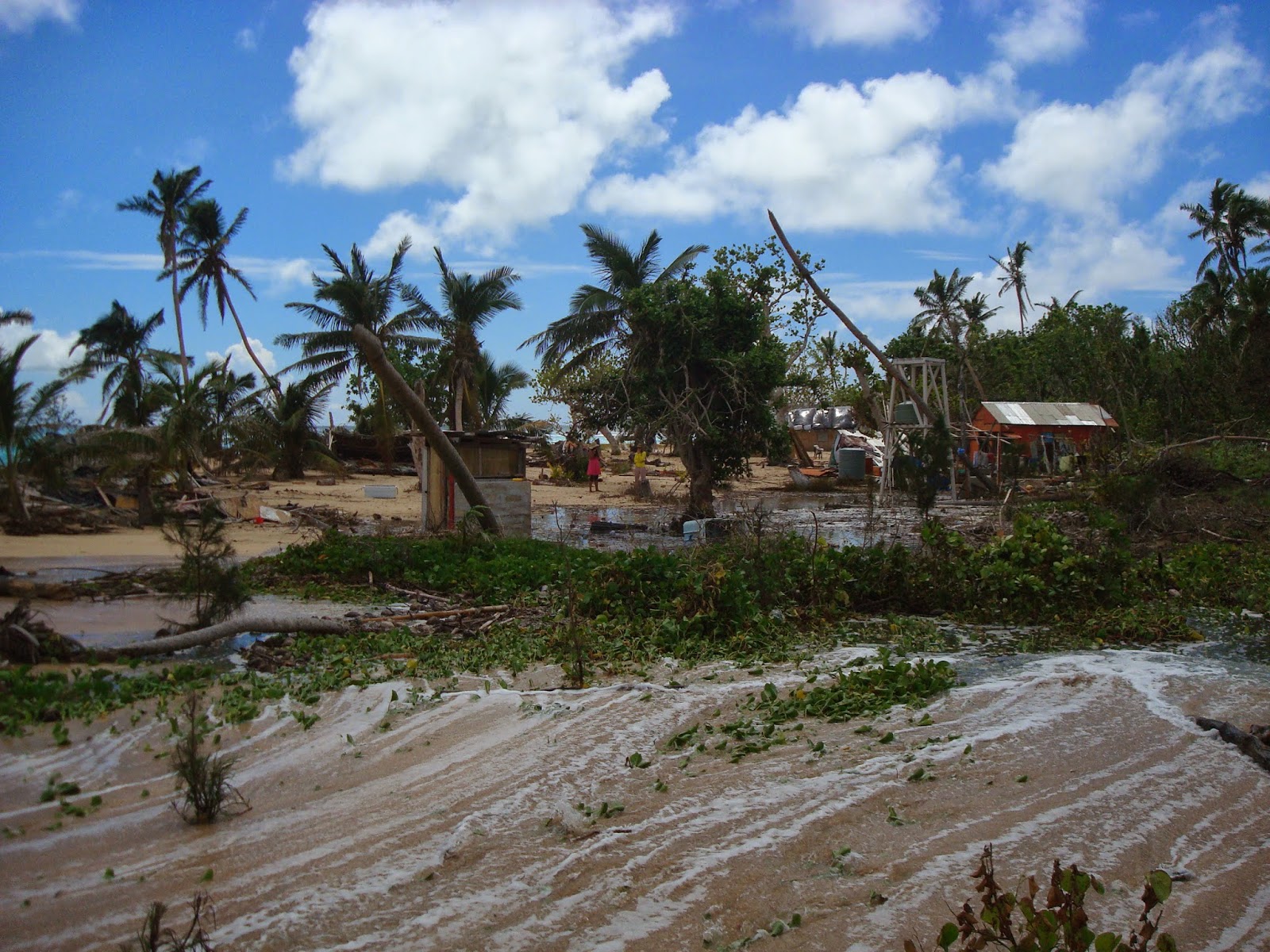 |
| View from the side of camp, tide threatening the still standing structures |
With each wave, the water got closer to the kitchen and our piles of recycled wood. We scrambled to move everything back even farther and blocked the kitchen and fale doors with plywood, what little good that did I'm not sure. It was truly distressing to see the camp slowly flood with water, even if it was only part of it. I suppose the silver lining of this scenario is that a lot of the debris got pushed back into the bush where it could potentially be more easily burned later. I was impressed at how calm Finau and Talanoa remained. I guess you can get used to disaster.
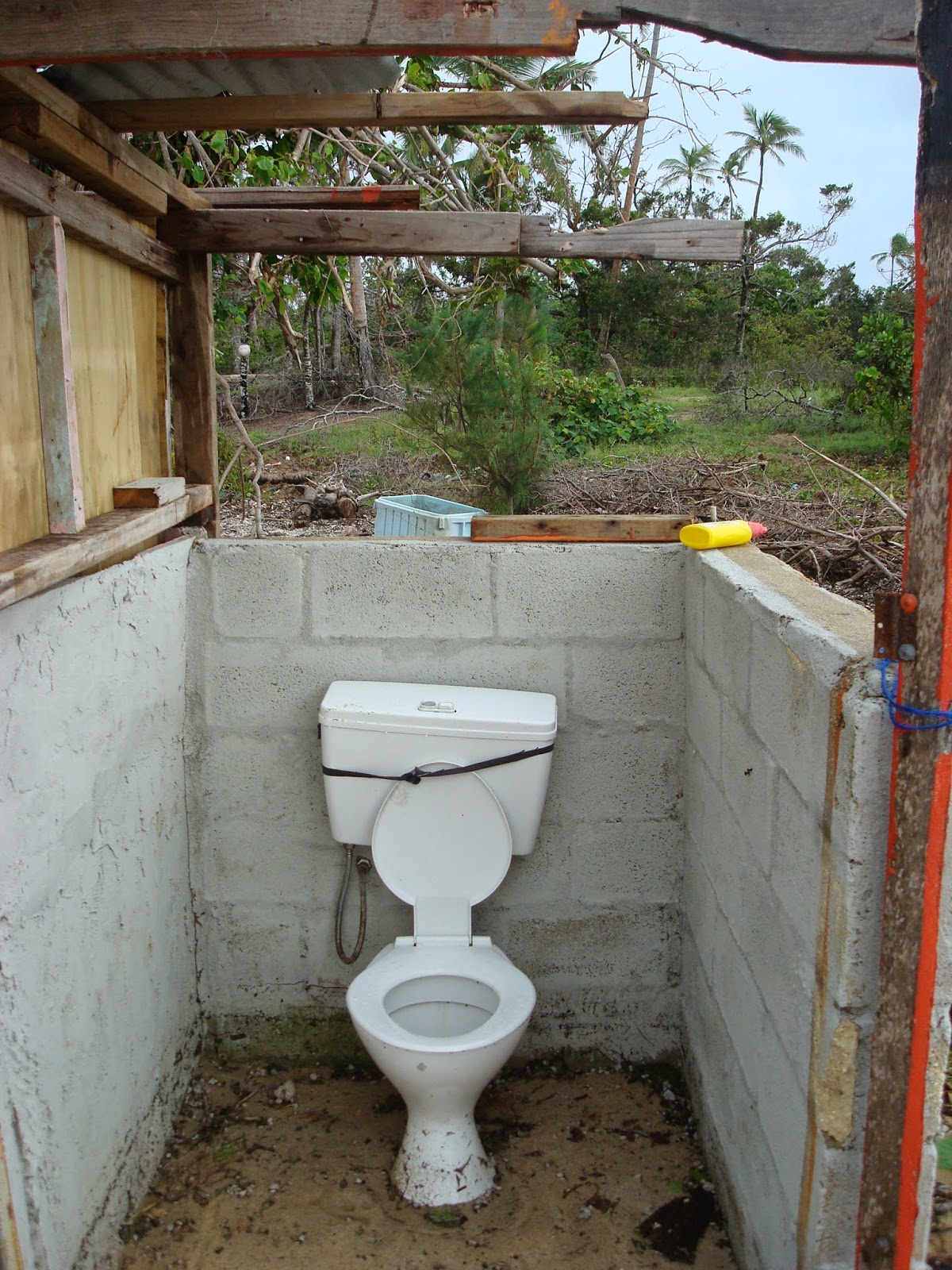 |
| Room with a view- emergency toilet after flood receded |
You may remember the emergency toilet from earlier in my blog, well here's the emergency to use it. The toilet with a door had a better floor and walls and therefore held the water better, so it was flooded up to the rim and toilet seat. The emergency toilet was only flooded to my ankles. Since I wasn't sure how long the flood would last and knew we had a long walk and kayak ride ahead of us, I decided to go for the emergency toilet. The beauty of staying on a mostly deserted island is that you can use a toilet with no door and not have to worry. It was the most scenic bathroom I've ever used!
We had to wait for low tide before we could head back to Pangai. Paul and I were to kayak back with all the bags while Finau and Talanoa walked/swam across the sandbar.
Eventually, the flood receded with low tide and nothing was permanently more damaged than before except for the fresh water supply. Hopefully the next high tide doesn't come so close!
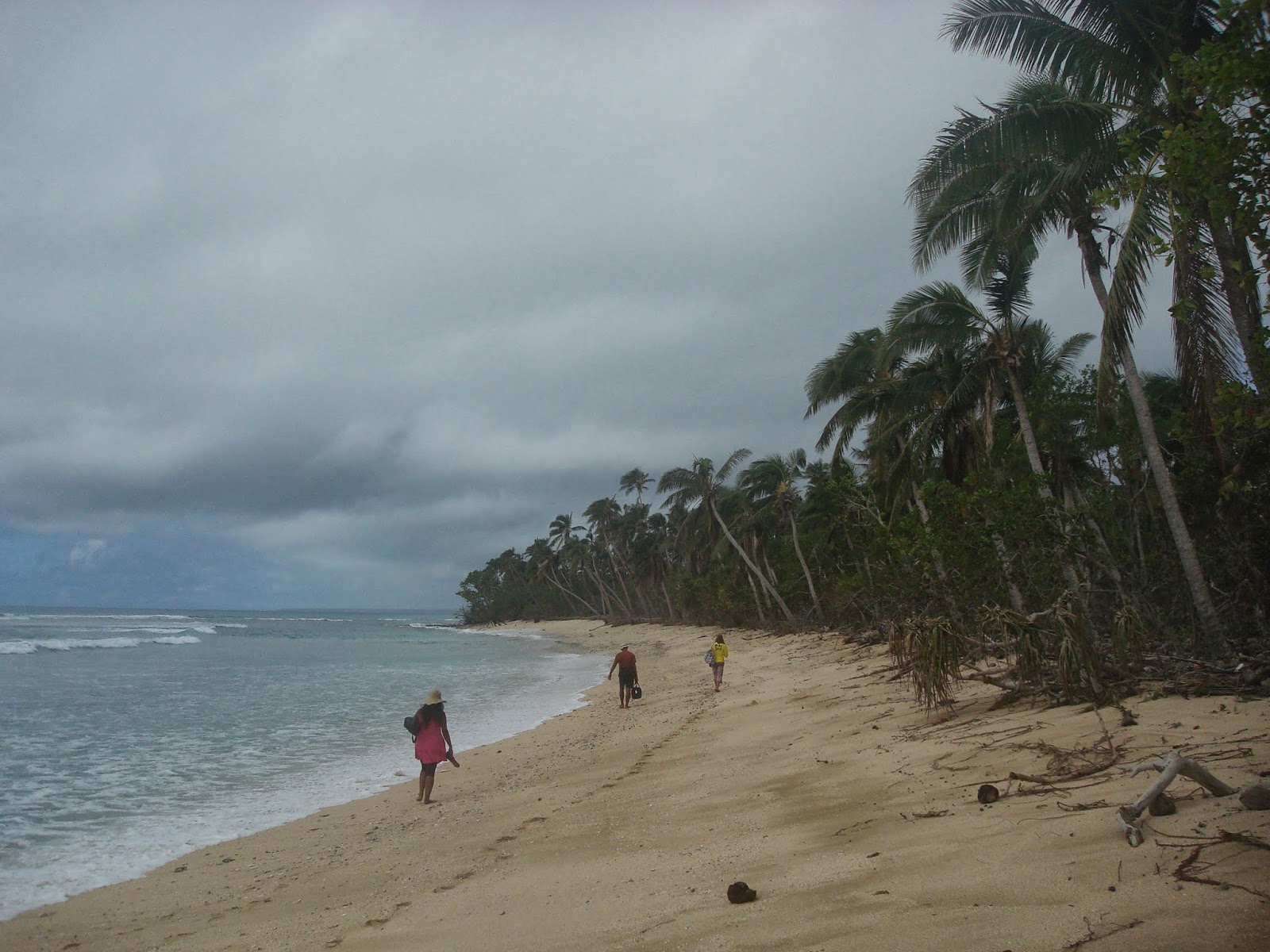 |
| Walking to Pangai |
With the arrival of low tide, we started the 30 minute walk to the tip of the island (the part closest to Pangai). I was glad for the cloud cover- it was still a hot walk even with the sun hiding behind the clouds. It felt good to wade through the water and cool down my feet a bit, something we had to do on occasion to get around the tree line!
Talanoa and I arrived at the kayak first, followed shortly by P who had stopped to take a few photos. Finau wasn't too far behind. Thankfully, Talanoa carried my bag or I would've been far behind Finau. We were all tired so took a brief break and enjoyed the view of the small channel between the two islands before packing the bags into and onto the kayak.
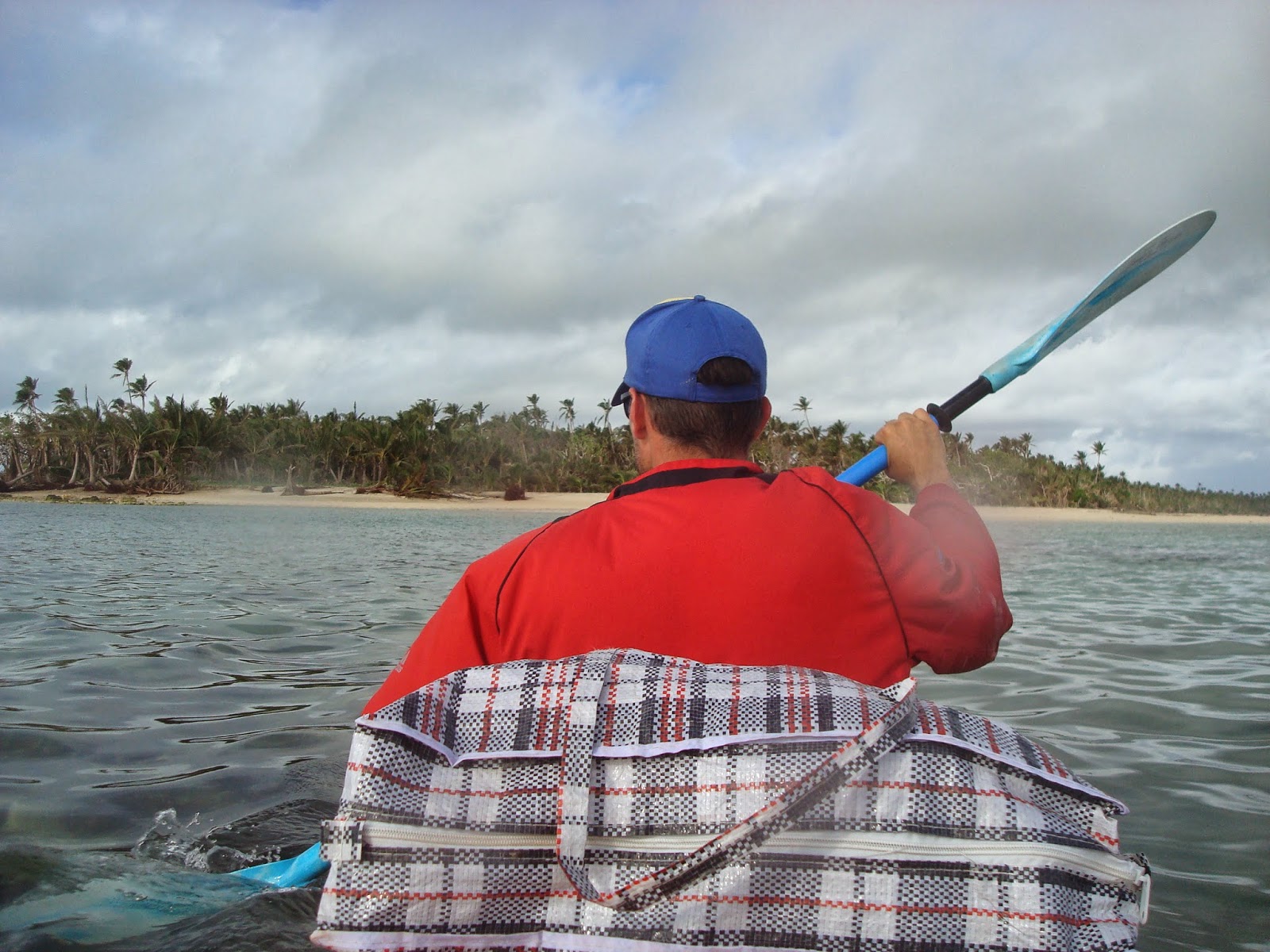 |
| Kayaking from Uoleva to Lifuka |
Soon everything was loaded up and it was time to set off to Pangai, Lifuka. P took the front and I steered from the back. Naturally, we arrived much before Talanoa and Finau, even with our slow pace and 'sightseeing' for fish on the way. Walking through water is not fast.
We weren't sure where the road was, so just pulled the kayak up onto the shore and waited for our hosts to join us. Talanoa guided the kayak through the shallow waters while the rest of us walked around the 50m or so to the road. Within two minutes, Talanoa's brother-in-law arrived with their van to pick us up. We all piled in with the kayak hanging out the back and drove to town. We have definitely had some eventful modes of transport on this trip.
 |
| Guiding the kayak through low tide |
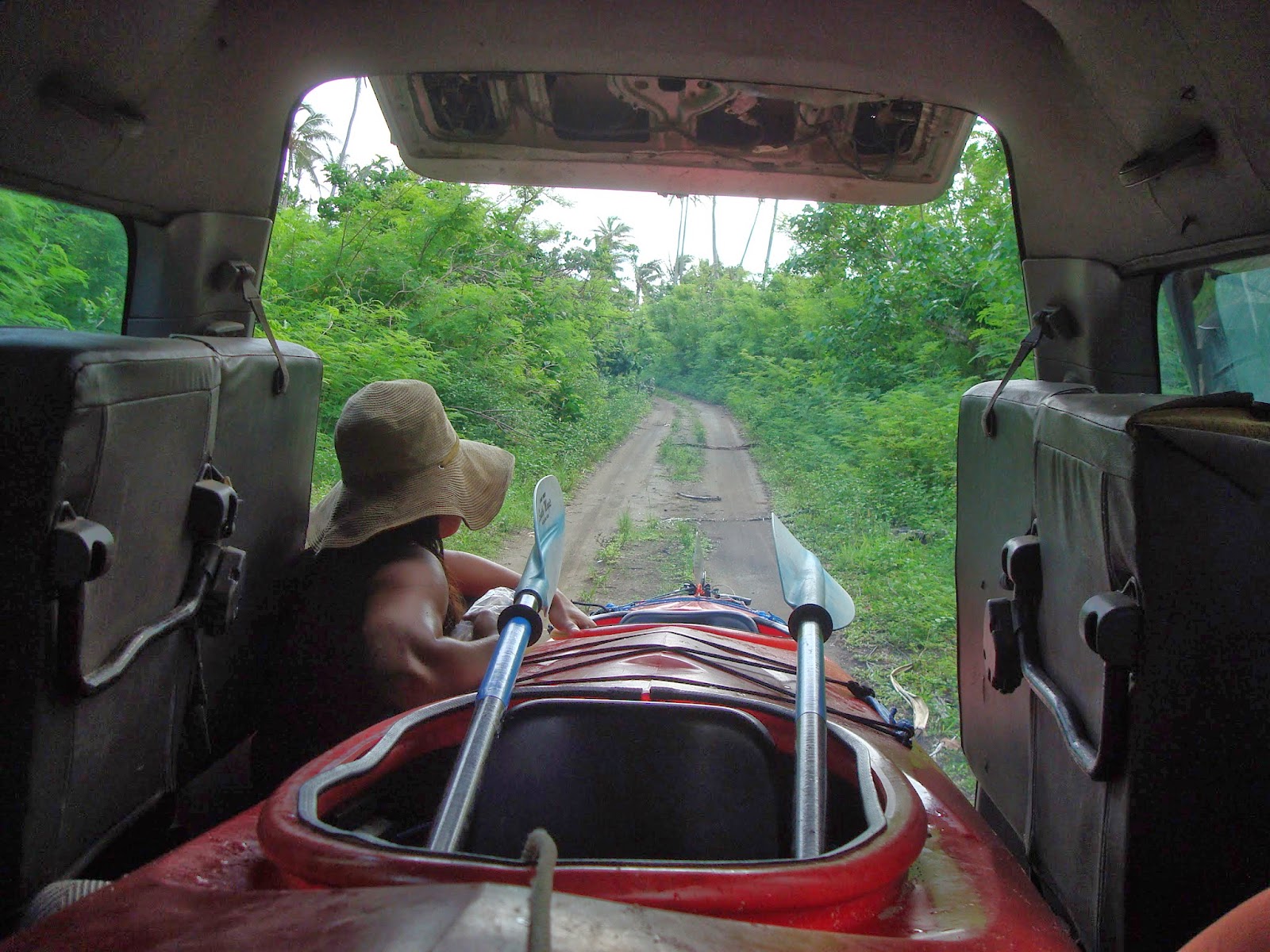 |
| The drive back to Pangai |


